Caribbean Cricket News · https://caribbeancricket.news/analysis/sri-lanka-series-recap-west-indies-series-win-shows-signs-of-rediscovery-76537

Sri Lanka Series Recap: West Indies’ series win shows signs of rediscovery
09.07.26, 12:57 Updated 09.07.26, 17:11

There is a particular satisfaction in a draw that feels like a victory. This wasn’t the hollow kind, where a team clings on and escapes by the skin of their teeth; this was the meaningful kind, where a team bats with such composure and collective authority that the opposition's attempt to manufacture a result never feels like a genuine threat.
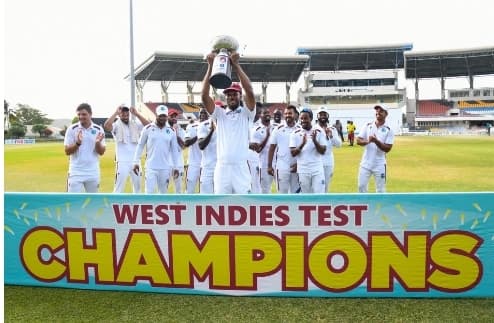
That is exactly how day five unfolded in Antigua, and it earned West Indies their first Test series victory in three years.
The Final Day: Calm in the face of Sri Lanka's gamble
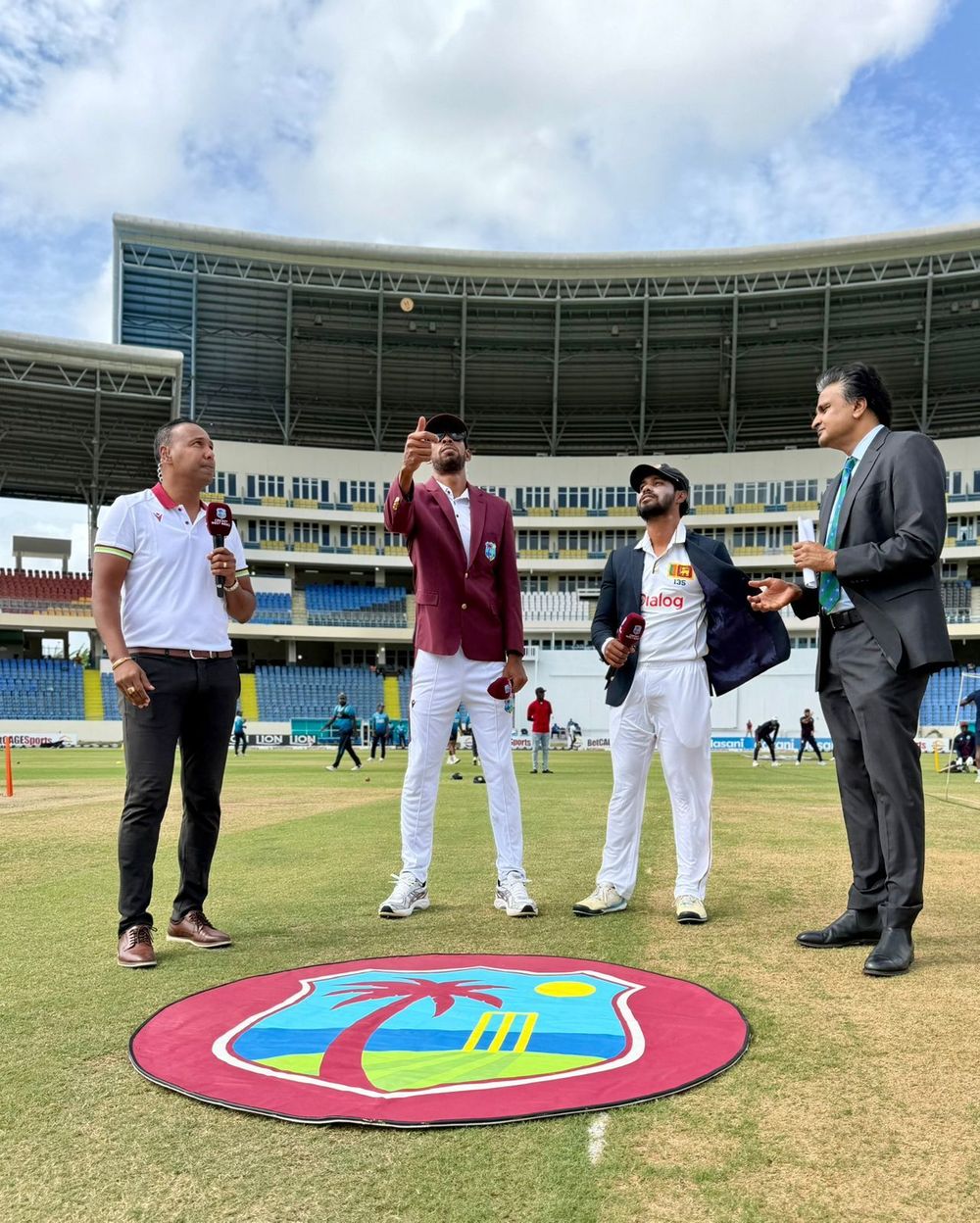
Sri Lanka declared their second innings at 251 for 9, three overs after lunch, setting West Indies a target of 302 to win from 60 overs. It was a declaration that required West Indies to either take the bait and chase an improbable target at five an over, or simply to shut up shop. The equation was always going to be one-sided, and West Indies did not hesitate for a moment.
Sri Lanka had pressed for quick runs in the morning session, adding 139 at a healthy rate of 5.79 an over from their overnight 92 for 2. Dinesh Chandimal signalled the intent with 71, including four boundaries and two sixes, before slicing a catch to backward point. Dhananjaya de Silva scored a run-per-ball 34, and Sonal Dinusha hit 28 off 26 balls as Sri Lanka pressed despite losing six wickets in the session.
It was an entertaining morning and a commendable attempt to manufacture possibility. But the target of 302 from 60 overs on a flat fifth-day surface, against openers who had already shown across this series that they could hold a crease when the situation demanded it, was never likely to yield a result.
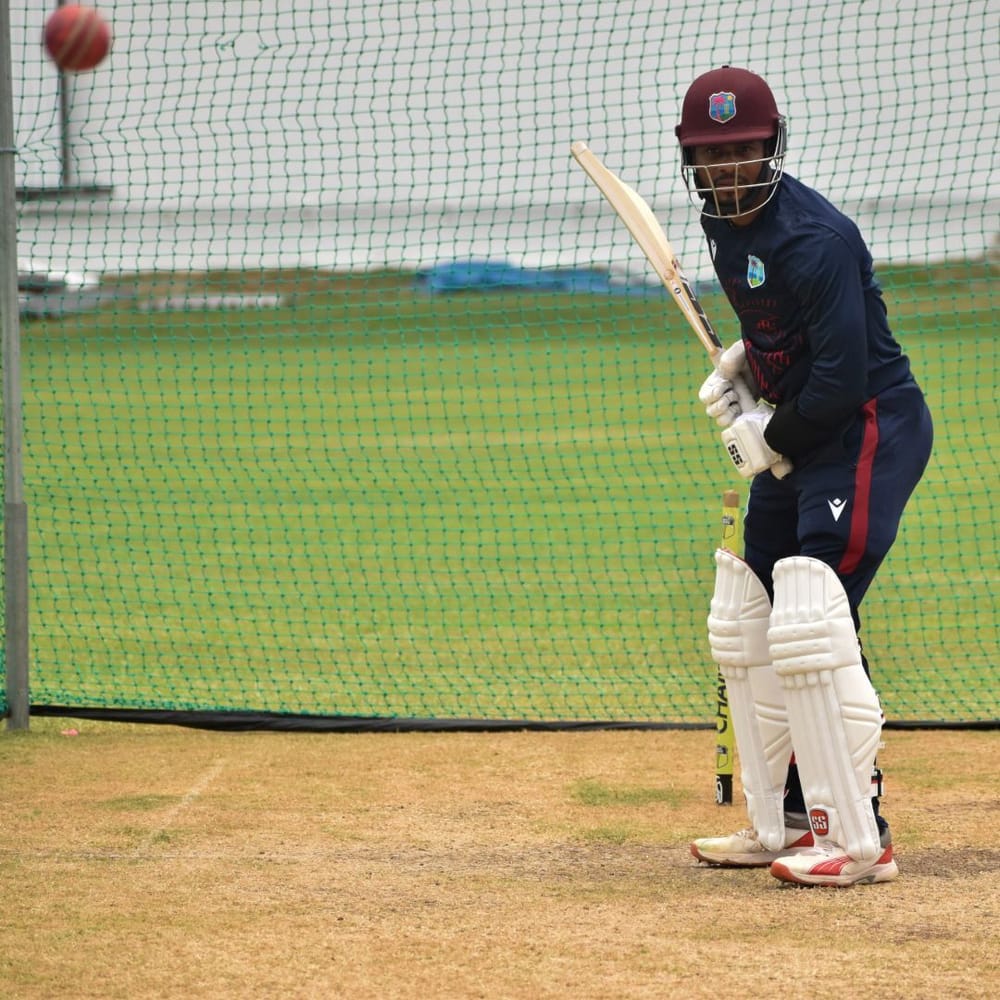
John Campbell and Brandon King made half-centuries and defied the Sri Lanka bowlers for 40 overs to secure the draw on a showery final day. Campbell and King were both 51 not out as West Indies reached 109 for 0 before the captains shook hands.
The rain, which arrived in the final session, rendered the final formalities academic. But by that point, the result had already been written in Campbell and King's refusal to be dislodged. Ironically, here was Brandon King, whose place at the top of the order has been the subject of genuine debate across the white-ball formats, producing exactly the kind of methodical, composed Test innings that justifies his red-ball selection. The format suits him, even if the shortest version does not.
A historic moment, properly understood
Let the significance of what happened be stated plainly.
West Indies have claimed their first Test series victory in three years and their first win in eleven series since 2023. The backdrop against which this victory was achieved makes it even more resonant. Only twelve months before this series, West Indies had been bowled out for 27 by Australia, the lowest score in their entire Test history. It was a number so alarming it prompted genuine questions about where this team was heading and whether the floor had finally been reached.
Twelve months later, they have racked up a Test series victory, a world record partnership, three individual scores above 180 from their batters across two Tests, an innings win in the first match, and a second-match draw secured from a 491-run deficit. They tallied a total of 1408 runs across the five days of the second Test alone; a record for any Test between West Indies and Sri Lanka.
The distance between those two data points, 27 all out and 1408 runs in a single match, is not merely statistical. Instead, it tells the story of what happens when a team finds belief, structure, and a dressing room culture that refuses to let a moment define what comes next.
West Indies secure a generational test series win

The Batting: A transformation worth naming
This is the takeaway that deserves the most attention, and the one that should resonate longest for West Indies supporters: Across two Tests, West Indies outbatted a Sri Lanka batting lineup that, on paper, is superior to their own.
Sri Lanka's batting unit includes Dhananjaya de Silva, Kamindu Mendis, Kusal Mendis, Dinesh Chandimal, and Pathum Nissanka, who are all technically accomplished players with strong Test records. The visitors posted 308, 549, and 251 across the series. West Indies, meanwhile, posted 626 and 499. The total runs scored by West Indies batters in this series, 1125 in two innings across two Tests, is more than Sri Lanka managed across three innings.
That is a pattern rather than a coincidence, and patterns, in Test cricket, mean something.
What produced this transformation? Three things stand out. First, partnerships. West Indies batted in pairs across both matches, saving them from having to rely on a single batter accumulating at one end while wickets fell at the other. These sustained stands wore Sri Lanka's attack down across sessions, and in the process, the Jangoo-Chase partnership of 401 broke a world record. The Hope-Greaves tally of 242 in the second Test became the best fifth-wicket stand in the Test history of West Indies vs Sri Lanka.
Second, conversion. Justin Greaves' centuries now outnumber his Test fifties three to one, a ratio that marks a batter who has learned to go big when set. Hope's 112 was his first century in the Caribbean. Chase's 194 was a career-best that arrived when many had written off his batting entirely. These were not flukes. They were evidence of application and intent.
Third, and perhaps most importantly: temperament. When West Indies faced a 491-run deficit in the second Test, they did not collapse. They did not panic. They absorbed Sri Lanka's bowling for session after session, batted intelligently, and made the match safe. That is a quality this batting unit has not consistently shown for years.
The Fielding: Quietly one of the team's greatest improvements
The fielding deserves its own mention. It was not perfect; Da Silva's drops in the first Test were genuinely costly, and there were moments across the second where chances went begging. But the overall standard across this series was markedly better than what West Indies have produced in the recent past.
Catches were held at slip. Direct-hit opportunities were taken. Boundaries were saved through athleticism rather than effort. The body language in the field reflected a group that understands that every run prevented is a run that may matter later. Against Sri Lanka in this series, it did matter. The margins in the second Test required West Indies to produce maximum effort in every phase, and the fielding unit delivered.
302 Target Set On Day 5 | Highlights | West Indies

The series in individuals
Justin Greaves was named Player of the Match and Player of the Series, an entirely deserved double. Across two Tests, he contributed 131 and 180, and chipped in with the ball when needed. "There were simple words in the dressing room: Stay hungry," Greaves said. "Stay in, because you don't know when your next run is going to come from. Always try to capitalise when you're out in the middle." Those words carry the philosophy of the entire series.
Amir Jangoo's 233 on debut, in a match he only played because of Hope's injury, will be spoken about in Caribbean cricket for decades. Roston Chase's batting redemption was one of the quieter stories of the series but perhaps the most significant for the team's long-term future. Kemar Roach's 300th Test wicket, delivered with the same craft and intelligence he has always possessed, provided the series with its most emotional moment. And let us not forget that Jayden Seales reached 100 Test wickets at the age of 24, becoming the third-youngest West Indian to reach the milestone. He continues to build a career that could define this bowling attack for the next decade.
The Sammy Effect: Patience vindicated
The naysayers, as noted after the first Test, have quietened. They will not remain quiet indefinitely, and one series against a Sri Lanka side missing Nissanka and Kumara for significant portions is not a permanent rebuke to criticism. But what Darren Sammy has produced here goes beyond tactics.
Sammy has created a dressing room that trusts itself. Players who were written off in some way have been rejuvenated and delivered the goods at precisely the moments that mattered. That is not coincidence. That is culture. And culture, once established in a cricket dressing room, compounds over time.
The path ahead is not without challenge. Pakistan arrive later this year, and Bangladesh remain a genuine examination. The WTC cycle is still not a source of comfort where the statistics are concerned, but the transformation from 27 all out in Brisbane twelve months ago to a series victory in Antigua shows an unmistakable upwards trajectory.
West Indies are building something, and for the first time in a long time, it feels like it is going to last.